[PR]上記の広告は3ヶ月以上新規記事投稿のないブログに表示されています。新しい記事を書く事で広告が消えます。
Before we get started, we should tell you can still install Google apps on the device, but that's not really safe. But Huawei will have to go without Google in the long run anyway. Today we will have a test of this new Huawei 5G smartphone: Huawei P40 Pro.
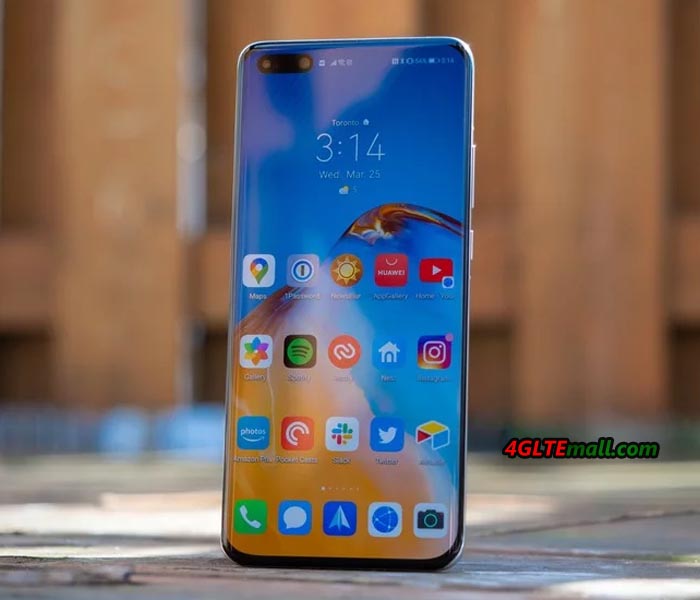
Huawei P40 Pro Specifications:
These are not all specifications of the Huawei P40 Pro. On the Huawei official website, you can get more information about the Android smartphone.
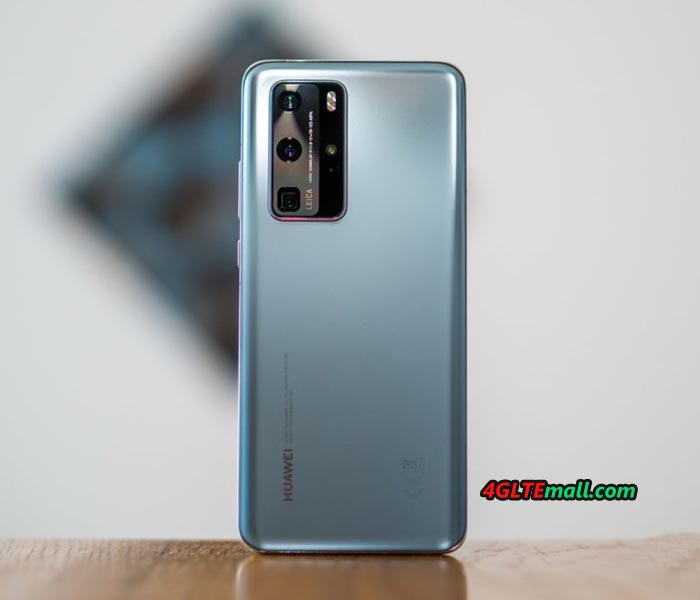
At the beginning of 2020, we was afraid that all flagship phones would get bigger, but Huawei hardly changed anything with the P40 Pro. It feels similar to the Huawei P30 Pro. That doesn't mean it's a particularly light and compact smartphone, but we find it a lot more comfortable than the latest new Samsung Galaxy S20 Ultra.
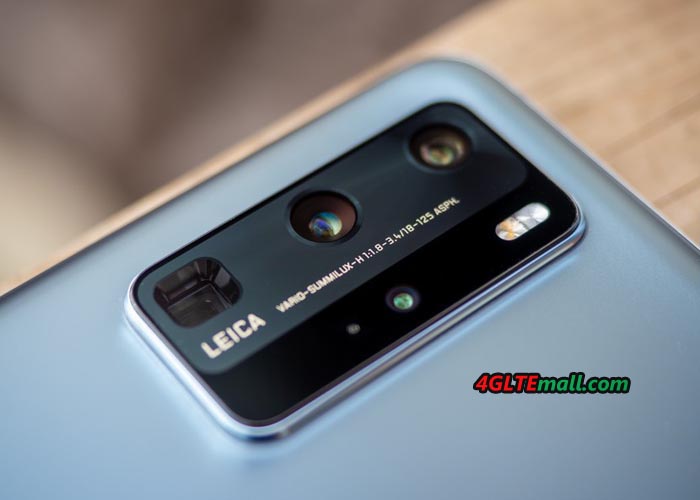
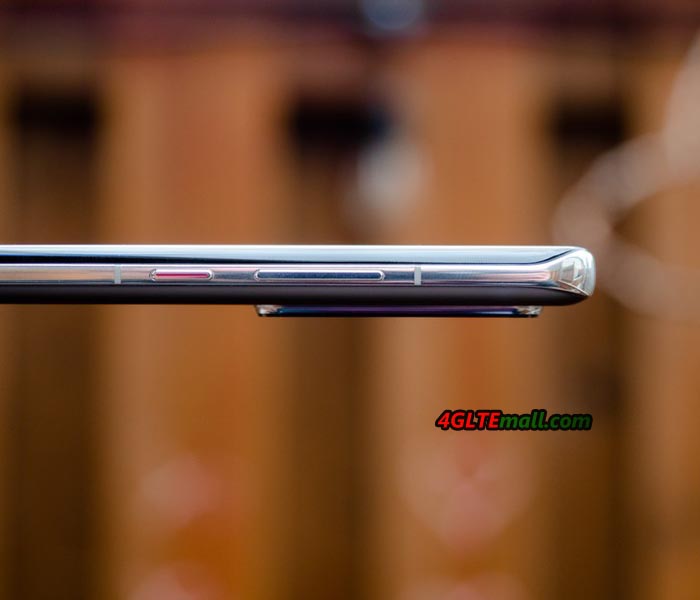
The processing is of course clear again and the design is now a bit "rounder" because the glass on the back and front has also been bent at the top and bottom. Incidentally, the display was not bent there. But we have to say that the difference compared to the P30 Pro is not big and it feels very similar. We tested the P40 Pro in silver color, which is one of the most beautiful colors on the market. The camera hump is now a bit bigger, which unfortunately has a small disadvantage. The camera hump is not quite as wide, but just as high, thick and sharp-edged as the Samsung Galaxy S20 Ultra. That could have been solved a little more comfortably for my taste.
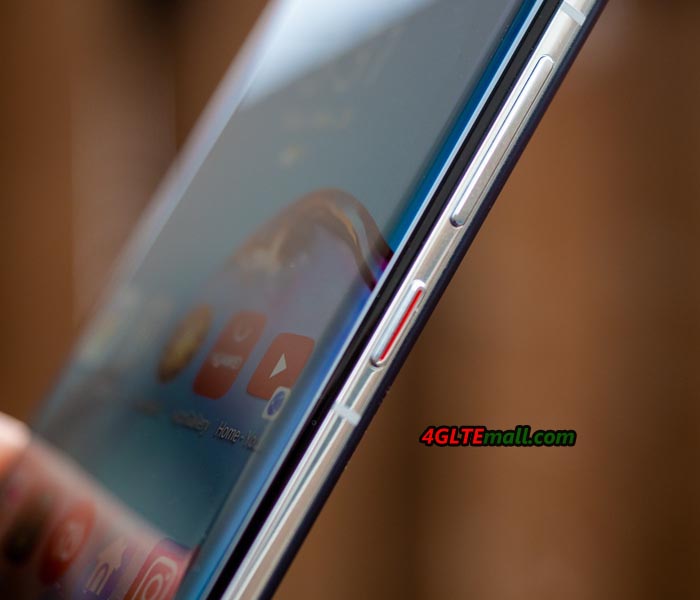
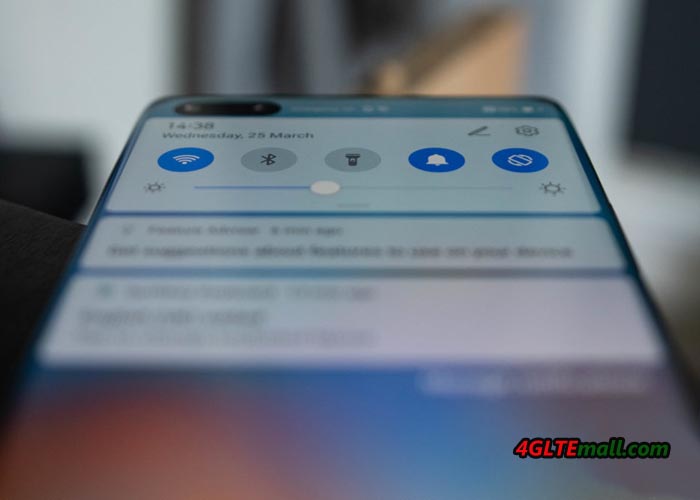
The display of Huawei P40 Pro made a very good impression in the first impression and we were also completely satisfied in the test. It doesn't quite come close to the current Samsung panel with 120 Hz, but it's not that far away either. FHD+ doesn't bother too much, by the way, it is criticized in this price range.
The front camera is very good, but the hole is too wide. There is a front camera and an infrared sensor designed to optimize unlocking in poor light. Face unlock works great too, but it's still a 2D scanner and not a 3D scanner. If you are already installing such a wide hole, then please use a camera that enables a 3D scan of the face.
But apart from that, we was very satisfied with the display, it delivers good colors and viewing angles, is pleasantly fast at 90 Hz and there is a thin bezel. It's not the best OLED display on the market, but it's good enough for a flagship in this price range, and luckily not bent as much as the Mate 30 Pro.
The highlight of the P series is the camera and that will also be the case in 2020. Huawei has improved the video quality and it still does not come close to Apple and Samsung, but it is no longer a weakness (like last year). In addition, there is finally 4K with 60 fps. The quality should be enough for most.
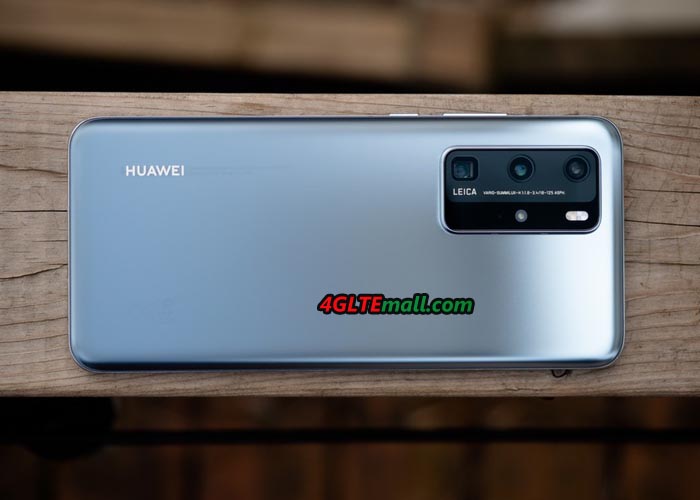
However, Huawei has put the focus back on the photos and there is now a new sensor with 50 megapixels. This sensor is damn good and takes extremely sharp pictures, even in poor lighting conditions without night mode.
The difference to the P30 Pro is not serious (which speaks for the P30 pro), but the P40 Pro has made another leap. The pictures with 5x zoom are also very passable.
Too bad that the 10x optical zoom is only available in the Huawei P40 Pro Plus, that would have been a unique selling point. The 10x hybrid zoom is also good. The 5x zoom of the Huawei P40 Pro is frankly a bit too much.
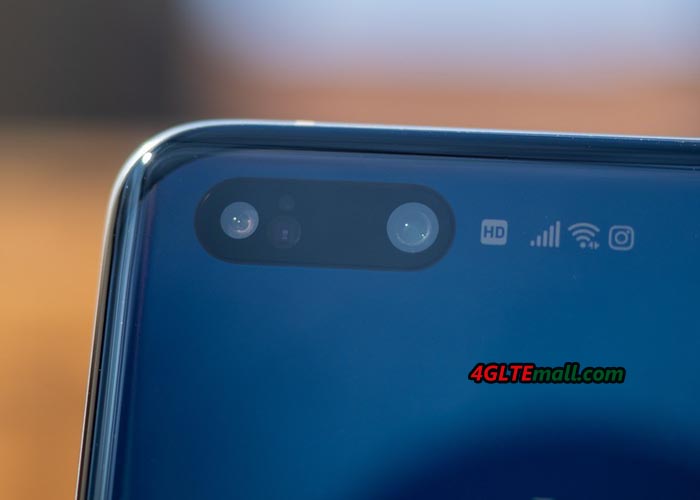
The front camera takes very good pictures, as we have already mentioned and the ultra-wide shots can also convince. With portrait photos, the Huawei P40 Pro recognizes the outlines very well thanks to the ToF sensor, but we also found in the test that the object in focus often looked a little blurred. Huawei would have to add a software update.
Huawei has installed one of the best cameras on the market and shows that Samsung cannot deliver better pictures with twice as many megapixels. We think the sensor from Huawei is clearly better.
The Huawei P40 Pro offers excellent battery life. The competition has now built bigger batteries in their flagships, but Huawei gets more out of the 4200 mAh than Samsung out of 5000 mAh. The P40 Pro is again a long-distance runner, despite the 90 Hz, which drain the battery a little faster.
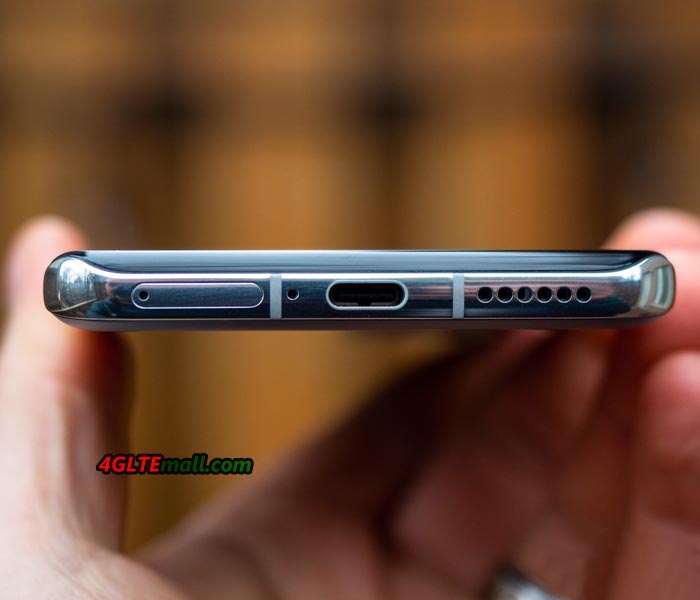
Nothing has changed with fast charging, as in 2019 there is the option for up to 40 watts, which is easily enough. It charges wirelessly with up to 27 watts, which is also enough. The Plus model, which comes in June, offers Qi with up to 40 watts and is the current leader on the market.
Huawei has of course given the P40 Pro reverse charging again, so you can also charge other Qi models wirelessly on the back of the P40 Pro.
Over the past few years, we have gradually become warm with EMUI and EMUI 10.1 is also a step forward.. In addition, the performance is right, because the Huawei P40 Pro is very fast, there is nothing to complain about.
But you know what is coming: The Google services are missing. No Google Play Store, no YouTube app, no Google Pay, no banking app in the AppGallery, no Android Auto, everything is missing. Some apps can be found through other stores or downloaded APK files, but to be honest it is tedious. Those who rely on Google and Co. will not be happy with the P40 Pro.
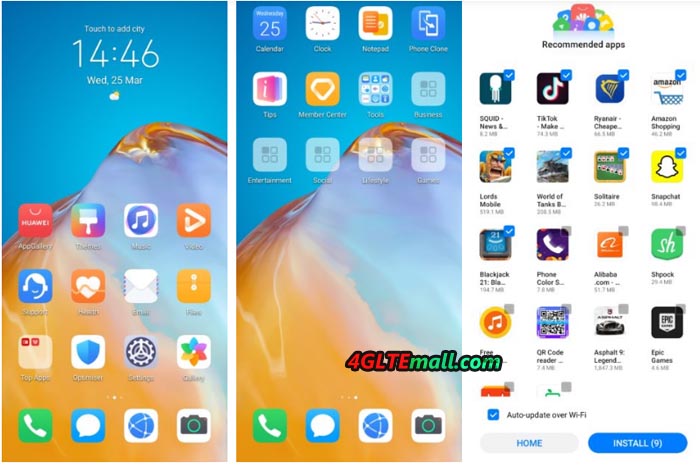
We tried to get the best out of it, but that's not enough. You don't just have to look for some apps somewhere on the web, you also have to check for updates and install them manually. And if there is a deal like Monument Valley 2, then you are unlucky with the Huawei P40 Pro.
This didn't bother me so much with the Huawei Mate 30 Pro, and the Huawei Mate Xs which is a smartphone for a very small target group. With Google apps, that would have been an excellent flagship.
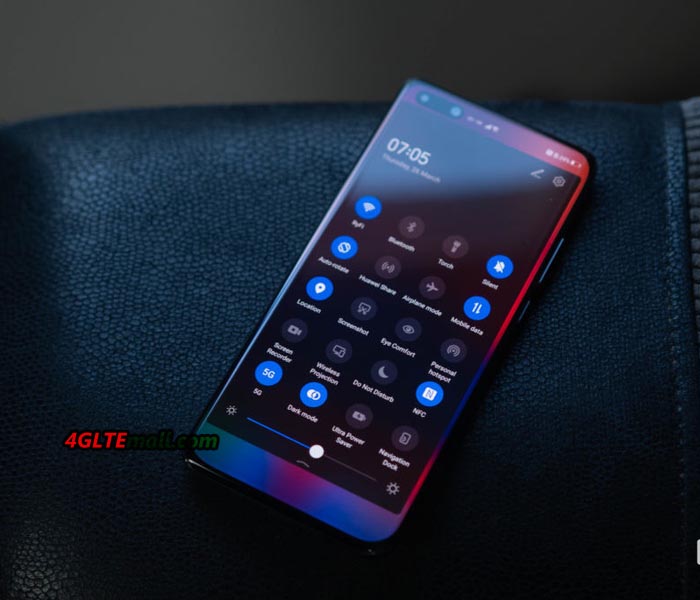
Huawei P40 Pro Conclusion
In summary, the Huawei P40 Pro has the best hardware on the market. It hasn't gotten bigger, it has a great display, it has an excellent camera, and it still has a good battery life and almost everything else you would expect in an Android flagship.
However, for many users, you couldn't use it in everyday life without Google apps. Only those who can completely do without Google apps and the selection of the Play Store can access here without hesitation.
If it weren't for the problems with the US government, the Huawei P40 Pro would again be one of the best Android smartphones on the market. But the software is decisive in the end and if you don't want to collect APKs and do without things like mobile payments via Google Pay, this is unfortunately wrong.
The Huawei P40 Pro with Google services would be a very clear purchase recommendation, but without it things look a bit different. Other 5G smartphones are not much worse (or sometimes better). The P40 Pro is going to have a hard time of it in 2020.
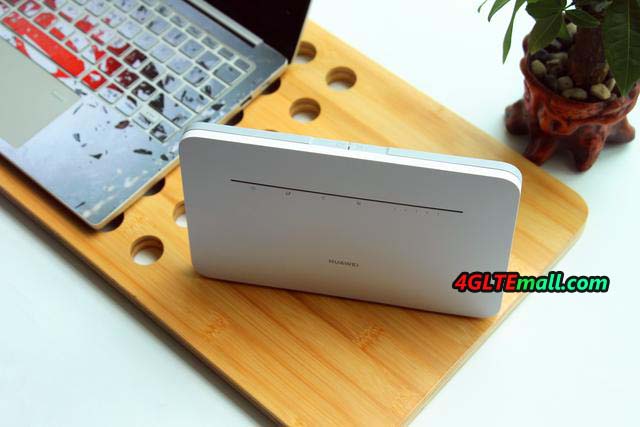
The new router Huawei 4G Router 3 Pro (Huawei B535-232) was available in European countries for a few months, which is integrated LTE Cat7 modem and allows speeds of up to 300 Mbit/s in the downlink. As we introducted before, Huawei B535 router has many predecessor such as the Huawei B618 or the Huawei B818, which can provide much faster link speeds, but they also cost a lot more expensive than Huawei B535.
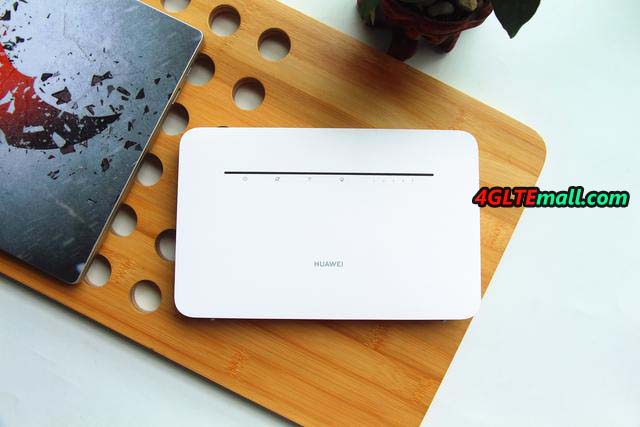
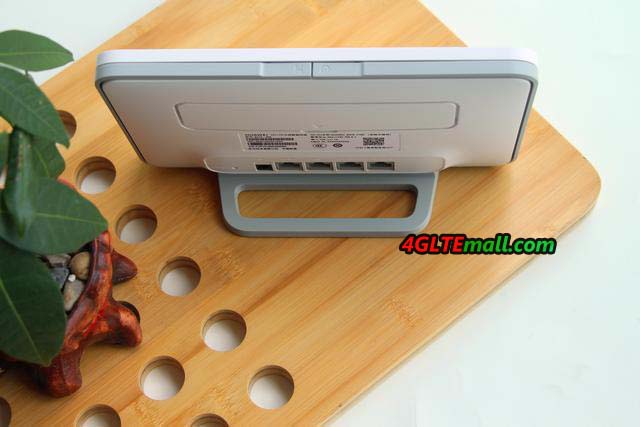
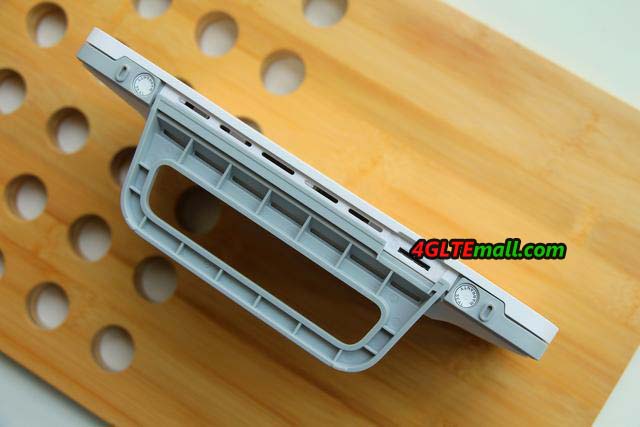
Like other Huawei 4G WiFi routers, the Huawei B535 LTE router is packed in a simple cardboard box. In addition to the router with the model number B535-232, you will also find a power supply unit (output: 12V, 1A) and a stand dock. A multilingual quick start guide and a warranty card are also included.
If you already had a few LTE routers in hand, the first thing you notice about the Huawei B535 is the comparatively flat design. The body of Huawei 4G Router 3 Pro is made of gray and white plasti and visually unobtrusive. Various LEDs are located on the front, which indicate the operating status. For example, the reception strength is signaled using five bars. There are also LEDs for power, internet, WLAN and LAN.
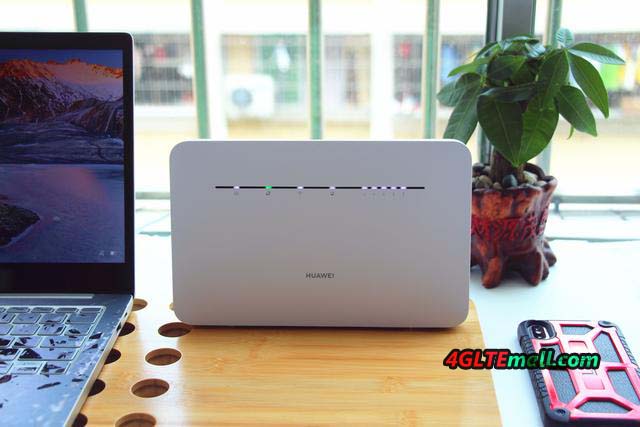
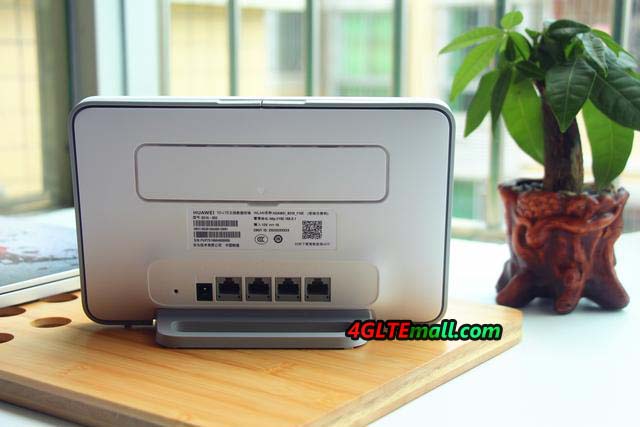
There are two buttons for power and WPS on the top. These have a clear pressure point. All connections are on the back of the Huawei B535 4G Router 3 Pro. There are four Gigabit LAN connections, a connection for the power supply, a reset button and two SMA connections under one cover for an external cellular antenna. The Huawei B535 does not offer support for USB devices or telephone.
In theory, the modem of the Huawei B535 LTE router can reach speeds of up to 300 Mbit/s in the downlink and up to 100 Mbit/s in the uplink (LTE Cat7). Almost all frequency bands important for Europe are supported, as the following list shows. Only the band 32 (1,500 MHz) cannot be used by the router, but there are no restrictions. Huawei does not provide any information about the possible CA combinations.
2G GSM network is not supported. In view of the now very good LTE network expansion, this is surely not be a good problem for most users.
In terms of LTE speeds, the Huawei B535 was able to convince in the test. Although the device was tested in the test with unlimited SIM cards from Vodafone, it was far from the theoretical maximum, but with well over 150 Mbit/s in the downlink and up to 70 Mbit/s in the uplink, you can do a good life. We also take a comparison test with the Netgear Nighthawk M2 Router and it shows that the network theoretically enables even higher speeds.
The latency was usually well below 30 milliseconds, and the peak was even less than 20 milliseconds. The reception and transmission power was very good in the test (LTE B3, B7, B20).
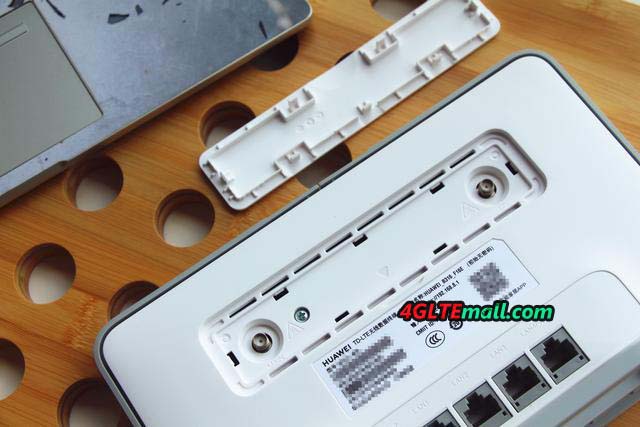
The Huawei B535 4G Router 3 Pro also offers the option of connecting an external cellular antenna. The effect of a 4G LTE outdoor antenna was not tested separately in the test. If the external antenna is not automatically recognized, you can manually switch to the external antenna in the web interface.
So that the maximum LTE speed also reaches the connected end devices, a fast WLAN module is of course required. The Huawei B535 supports WLAN ac at 2.4 GHz with up to 300 Mbit/s and at 5 GHz with up to 867 Mbit/s. In the test, the 867 Mbit/s could also be reached up to 5 meters by line of sight.
As soon as a wall came between the router and the end device, the data rate dropped noticeably. Fast surfing and video streaming was also about 10 meters away from the router and was still possible without problems after two walls. The Wi-Fi range of the Huawei B535 was convincing in the test!
The Huawei B535 can simultaneously supply a maximum of 64 end devices with a WLAN connection. The WLAN name can be set separately for 2.4 GHz and 5 GHz, so as the password. There is also the option of setting up a guest WLAN. The guest WLAN can either run indefinitely or be automatically switched off after one or four hours.
The Huawei B535 does not have a WLAN extender function, i.e. the use of an existing WLAN as Internet access. There is also no WLAN timer.
The four RJ45 Gigabit Ethernet LAN connections on the back allow the connection of devices such as computers, televisions or games consoles via cable. The connections worked smoothly in the test.
If desired, the LAN 4 connection can also be used as a WAN connection. This means that the internal cellular modem is switched off and the Internet connection is processed via an existing LAN connection. Of course, this is particularly useful if you only occasionally use the Huawei B535 as an LTE router. For the rest of the time, the device then functions as a normal WLAN access point.
To set up and configure the Huawei B535 4G Router 3 Pro, you can either use the Huawei Smart Home app (available for Android and iOS) or the browser web interface. Both the app and the web interface have a modern, functional and clearly structured design and are easy to use.
In addition to the usual settings for WLAN and network, which were mentioned in the test, there are also some more special functions. These include, for example, the VPN function, the bridge mode and the dynamic DNS function. There is also the option of filtering IP addresses or domains.
In addition to an SMS function, there is also a statistics function with which the data volume used and online time can be checked. There is also an easy-to-use parental control function, which can limit the usage time (separated by days and times) for individual devices, for example.
Unfortunately, neither the app nor the web interface offer the option of displaying detailed information about the Internet connection, such as the frequency band used, the antenna technology used or the CA status. There are also no such settings, for example to set the router to a specific frequency band. The LTE router models from AVM, for example the FRITZ! Box 6820 LTE offers significantly better equipment in this area. After all, there is the possibility to use "only 3G" or "only 4G". The Huawei B535 does not support GSM / 2G anyway.
The Huawei B535-232 4G Router 3 Pro left a very good impression in the test. The design of hardware and software is simple and functional, operation via app and web interface is simple and well thought out. In places, however, more information and setting options would be desirable.
The connection speeds via LTE and WLAN are good, and the many RJ45 Ethernet LAN connections are commendable. You have to do without a telephone system and a USB connection, but Huawei has installed connections for an external 4G LTE antenna. If you can live with the few functions described, the Huawei B535 is a very good LTE router at a fair price.
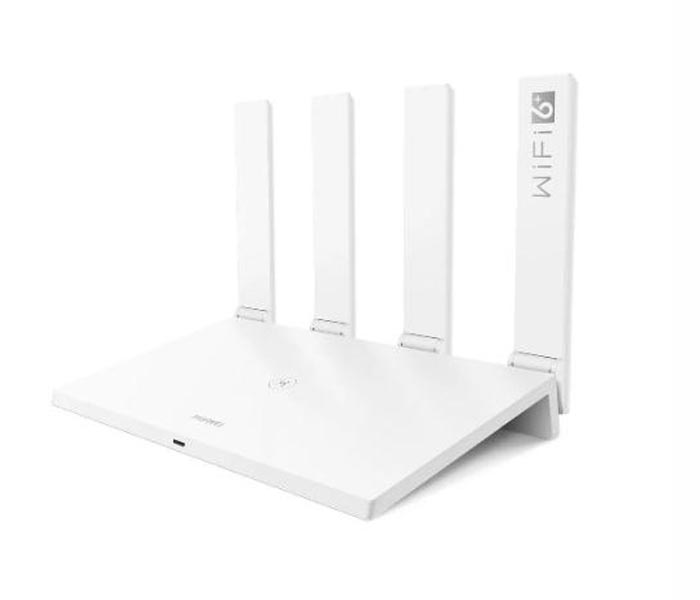
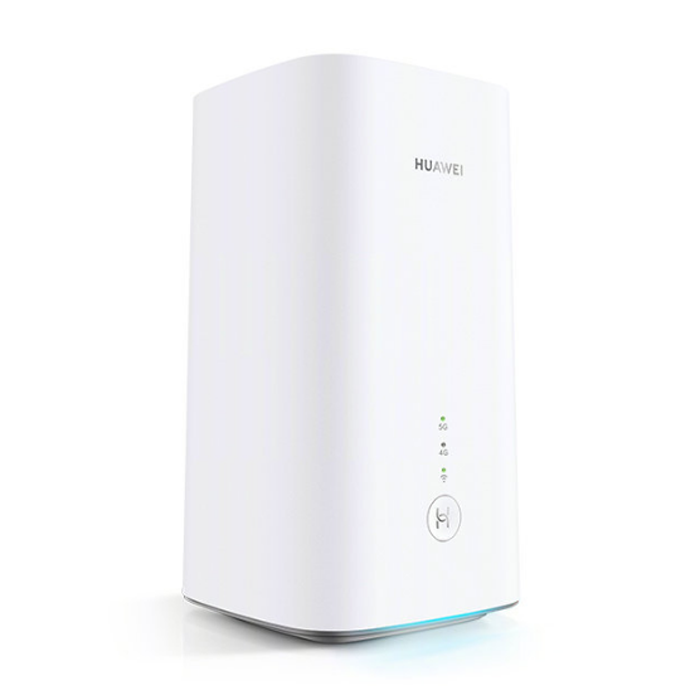
Huawei Consumer Business Group today launches several new 5G products during its virtual launch from Barcelona. In addition to product news, a new strategy is also presented that shows the company's full ecosystem capability. Key products presented during the launch are the foldable mobile phone Huawei Mate Xs with updated hardware and software, the flagship tablet Huawei MatePad Pro 5G, Huawei Wi-Fi AX3 and Huawei 5G CPE Pro 2, both of which enable Wi-Fi 6+ solutions. In addition, new additions to the flagship series Huawei Matebook, as well as AppGallery, Huawei's official app store based on Huawei Mobile Services (HMS), are being launched.
''We remain committed to our seamless screen and scenario-independent AI Life strategy. In order to build our long-term competitive advantages, we will continue to invest in chipsets, 5G communication, mobile AI, operating systems and camera and audio-visual solutions. We also look forward to working with developers globally to catalyze the development of our screen and scenario independent ecosystem. Together with developers, we will take the user experience to new heights. The scenario-independent ecosystem 1 + 8 + N not only sets a new standard for user integrity and security, but also delivers a high-quality user experience to consumers worldwide'', says Richard Yu, CEO of Huawei Consumer Business Group.
2019 was a strong year for Huawei Business Consumer Group. Profit for the year was $ 67 billion (SEK 651 billion), an increase of 30 percent. During the year, 240 million mobile phones were delivered, ensuring Huawei's position as the world's second largest mobile phone manufacturer. In addition, PC business increased by 200 percent, watches and activity bracelets increased by 173 percent and wireless headphones increased by 210 percent in 2019.
Huawei is now launching the sequel to its foldable mobile phone Mate X. The new mobile, Huawei Mate Xs, takes Huawei's foldable technology a step further. Huawei Mate Xs are packed with Huawei's latest technology, camera, processor and display and in addition an improved Falcon Wing Design. The mobile delivers a powerful performance and a seamless user experience in both mobile and tablet mode.
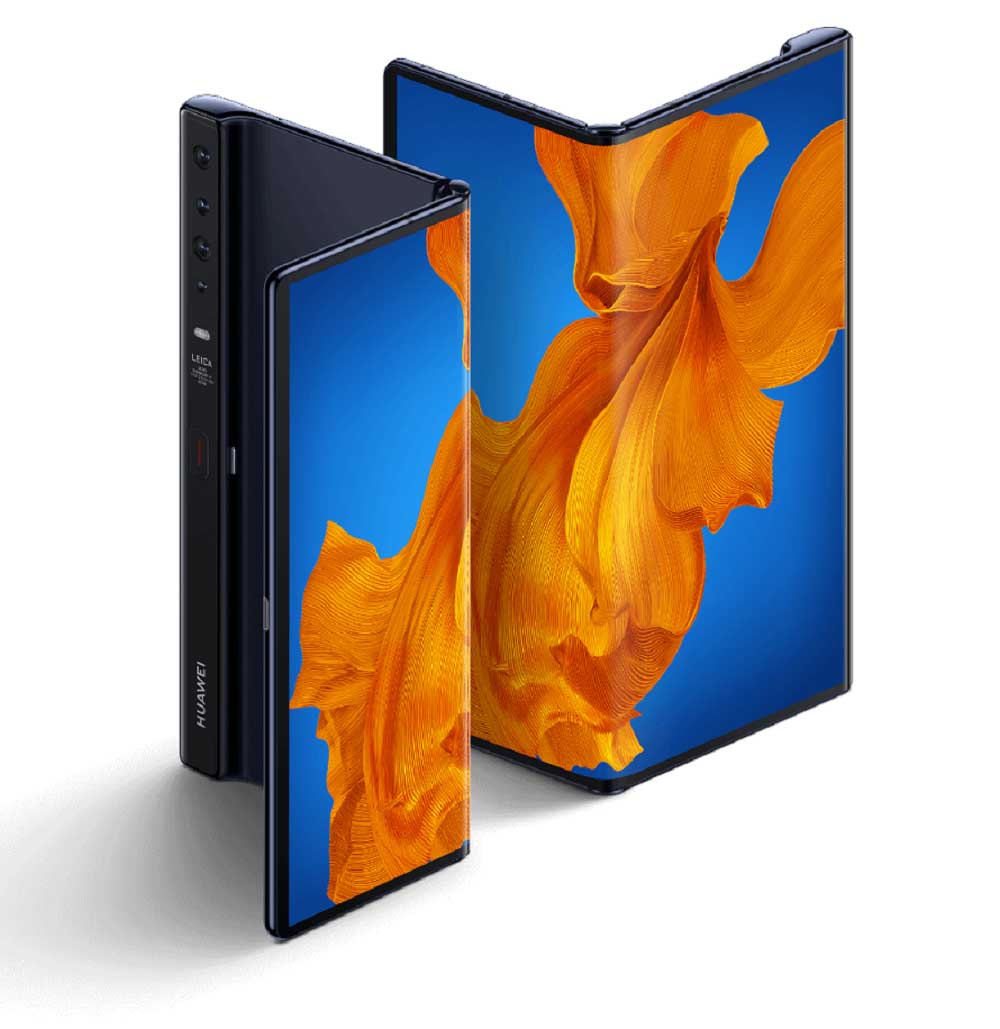
Equipped with Huawei's own flagship Kirin 990 5G SoC, the Mate Xs is a complete upgrade including improved mobile AI and 5G communications.
The phone is equipped with a SuperSensing triple camera, which consists of a 40 megapixel SuperSensing camera, a 16 megapixel ultra-wide angle camera, an 8 megapixel telephoto camera and a 3D Depth Sensing camera.
Huawei Mate Xs support Multi-Window apps, providing a smarter and more dynamic experience. In addition, the Mate Xs is the fastest 5G mobile in the class.
Faster speed with Wi-Fi AX 6 series
As part of Huawei's seamless scenario-independent AI Life strategy, connectivity devices play a major role. Wi-Fi routers, customer-premise equipment (CPE) and communication models connect the ecosystem “1 + 8 + N” (see below). Together, they contribute to a safe, smart and fast experience for users.
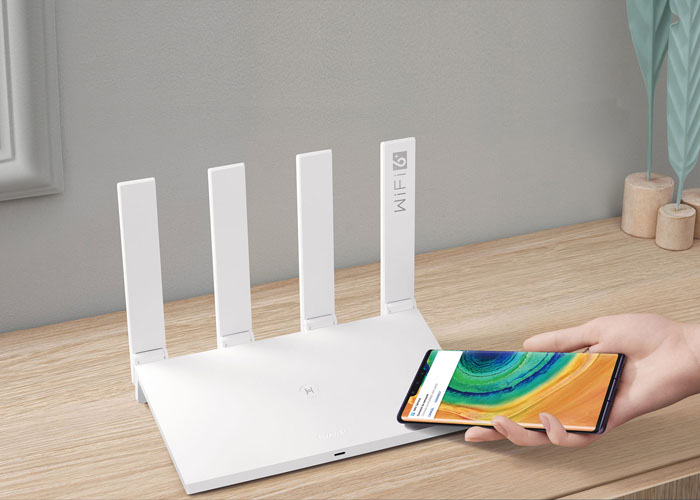
Huawei is a major player in the development of Wi-Fi 6 standard in addition to its prominent and leading role in 5G technology. In the IEEE 802.11ax standard working group, five Huawei technology experts are currently involved. In addition, Huawei is the most prominent contributor in the industry's efforts in the Wi-Fi 6 (802.11ax) project. Huawei accounted for 15 percent of the 260 submissions submitted. In the development of Wi-Fi 6+, Huawei has used the synergy between its own chip and software optimizations. Wi-Fi 6+ supports an uninterrupted connection with a bandwidth of 160MHz and Huawei's exclusive dynamic narrowband technology. The two combinations are a breakthrough for signal coverage and for Wi-Fi speed.
During its launch in Barcelona, Huawei introduced the Gigahome 650 and Kirin W650 - the latest chipset for Wi-Fi 6+ routers and smartphones. The new Wi-Fi AX3 series is equipped with the chip Gigahome 650, which supports dual-band dual-competitor (DBDC) and provides speeds up to 3000Mbps. When used with a Huawei device, which also supports Wi-Fi 6+, Wi-Fi AX3 routers can deliver better signal coverage and speeds than Wi-Fi 6 routers.
Huawei also introduced the Huawei 5G CPE Pro 2. It is a new Wi-Fi 6+ CPE that is 30 percent smaller than its predecessors. It has received upgrades such as support for up to eleven 5G bands. In addition, Huawei's exclusive Super Uplink technology has improved charging speed and latency.
New flagship tablet - Huawei MatePad Pro 5G
As an important part of the smart ecosystem, the new Huawei MatePad Pro 5G is designed to work with Huawei mobile phones, watches and other devices. The tablet has a key role in the Multi-screen collaboration feature with Huawei Share that provides a seamless multi-device experience for the user.
With its super-thin display edges, the tablet has the world's largest display area in relation to the size of the tablet. As much as 90 percent of the surface is covered by the monitor. The tablet has outstanding performance and battery life thanks to the Kirin 990 manufactured with 7-nanometer technology.
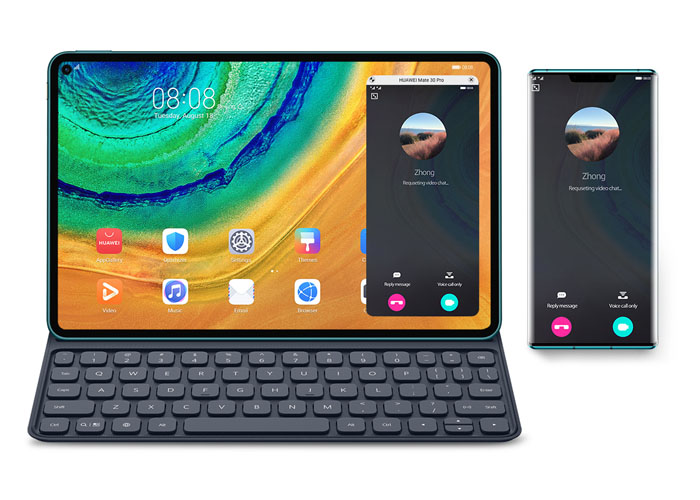
The new model comes with EMUI10 which has several features that facilitate use and increase productivity - such as Huawei Share Multi-Window, Multi-screen Collaboration and Huawei APP Multiplier as well as support for the Huawei M-Pencil and Smart Magnetic Keyboard accessories. The latter two features are perfect for use with MatePad Pro's PC mode. The new tablet is also the first in the world to support wireless and reverse wireless charging.
During the launch, Huawei also took the opportunity to present the latest MateBook models. The upgraded Huawei MateBook X Pro 2020 is powered by the 10th-generation Intel® Core ™ processors and is equipped with FullView display that covers as much as 91 percent of the screen area. In addition to the MateBook X, the new series Huawei MateBook D is also being launched as part of the MateBook family. MateBook D offers an innovative and smart experience in MateBook's signature design.
Innovation in both hardware and software for the future
During the past decade, Huawei has developed and refined the ecosystem “1 + 8 + N”. The system is based on the idea that the mobile phone is in focus surrounded by a number of accessories such as tablets, smart watches and laptops offered in Huawei's own range. The accessories in turn are put in the context of “N” which stands for smart homes, mobile offices and the like. The system is supported by the Huawei Share and Huawei HiLink features, which bridges all devices to create a unified and holistic user experience. In addition to creating innovation in hardware, Huawei continues to develop the Huawei Mobile Services (HMS) ecosystem, which is available to consumers through Huawei AppGallery.
With a scenario-independent hardware and a software platform that works in balance, Huawei delivers a high-quality user experience. Information is seamlessly shared between the user's connected devices, in all scenarios.
Introduces Huawei AppGallery
HMS Core is a collection of tools for Huawei's partners and app developers to create unique and new user experiences in all of Huawei's hardware and software products. Developers can quickly deploy Huawei's on-device features such as HiAI, distributed technology and camera features into their apps, by integrating HMS with HMS Core 4.0
“To build and refine an aviation ecosystem that supports Huawei products going forward, the chip-device-cloud capabilities are gradually being opened up to developers globally, through HMS. The ecosystem is a key component of Huawei's seamless scenario-independent AI Life strategy, as it encompasses scenario-independent functions, global distribution, and life cycle management capabilities. The HSE system will be a powerful pillar for our units”, says Richard Yu, CEO of Huawei Consumer Business Group.
For example, Cewe, Europe's largest photo printing company, uses Huawei's Share Kit to streamline the device pairing process. The printing process becomes intuitive, enabling faster production.
Huawei AppGallery also offers Quick Apps. Quick Apps is an innovative category created for devices in the 5G era. Quick Apps are developed based on industry standards, require no installation and use minimal system space. Users can easily click on the apps to use them, just like traditional apps. Already, over 1700 QuickApps are available in AppGallery and are a rapidly growing category.
In addition to creating their own apps, Huawei also collaborates actively with popular quality apps to ensure the user experience. In addition, Huawei has created a security and protection system to protect its users. The system includes verification of developers' names, a four-step review process, download and installation protections and preventative measures. Today, with nine years of app development on the neck, Huawei AppGallery is one of the world's top three marketplaces for apps.
“In the future, we will continue to expand our app ecosystem in Huawei AppGallery, hoping to not only offer a secure and reliable platform, but also to give our users greater choice. The continued success of our successful ecosystem will remain one of our top priorities”, says Richard Yu, CEO of Huawei Consumer Business Group.
Huawei is actively working to engage developers of popular apps around the world to develop the ecosystem. Developers are welcome to become part of the ecosystem and work together with Huawei to provide smarter app experiences for users around the world.